

In 2026, Magnum completed a retail tenant improvement for Saatva at 379 University Avenue in Palo Alto, California. The project spanned 2,760 square feet of high-end retail space in one of the Bay Area’s most prominent shopping corridors. Magnum held a multi-trade contract covering drywall framing, T-bar ceiling systems, and painting. General contractor Clune Construction managed the build, with Ware Malcomb leading the architecture. One commercial finishing contractor handled the full interior scope.
A Project That Required More Than Standard Execution
Retail tenant improvement projects at this level demand precision across every finish surface. Saatva’s University Avenue location is a brand environment — every detail of the interior is a direct reflection of the product and the customer experience it represents. For Magnum’s commercial framing, ceiling, and painting teams, that meant bringing the same coordination discipline to 2,760 square feet that would be expected on a project three times the size.
The design carried a high volume of custom soffit work, including both serpentine and round soffit forms throughout the space. That geometry drove real complexity: tight clearances, irregular bracing conditions, and a paint sequence that couldn’t be resolved with a standard install order.
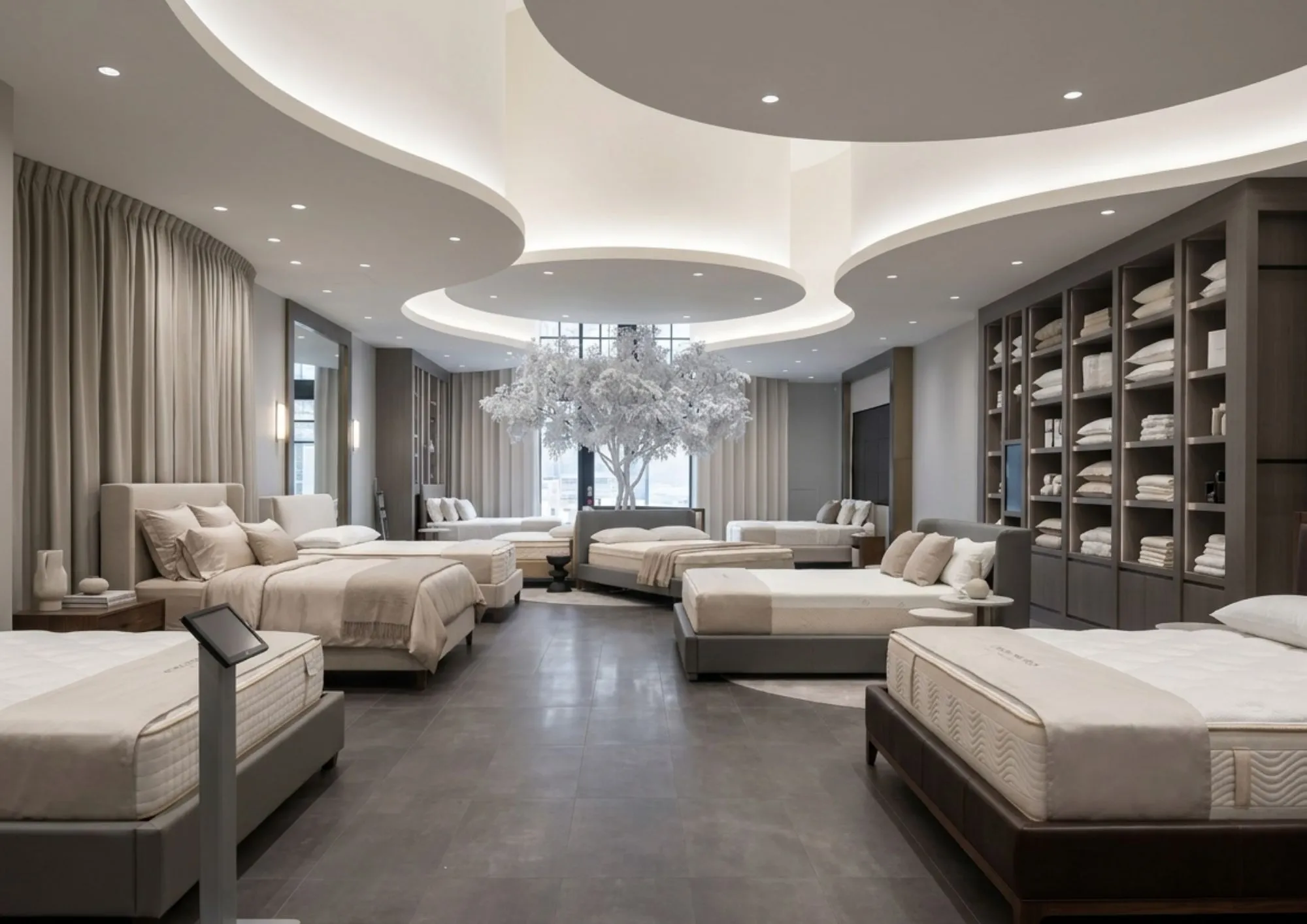

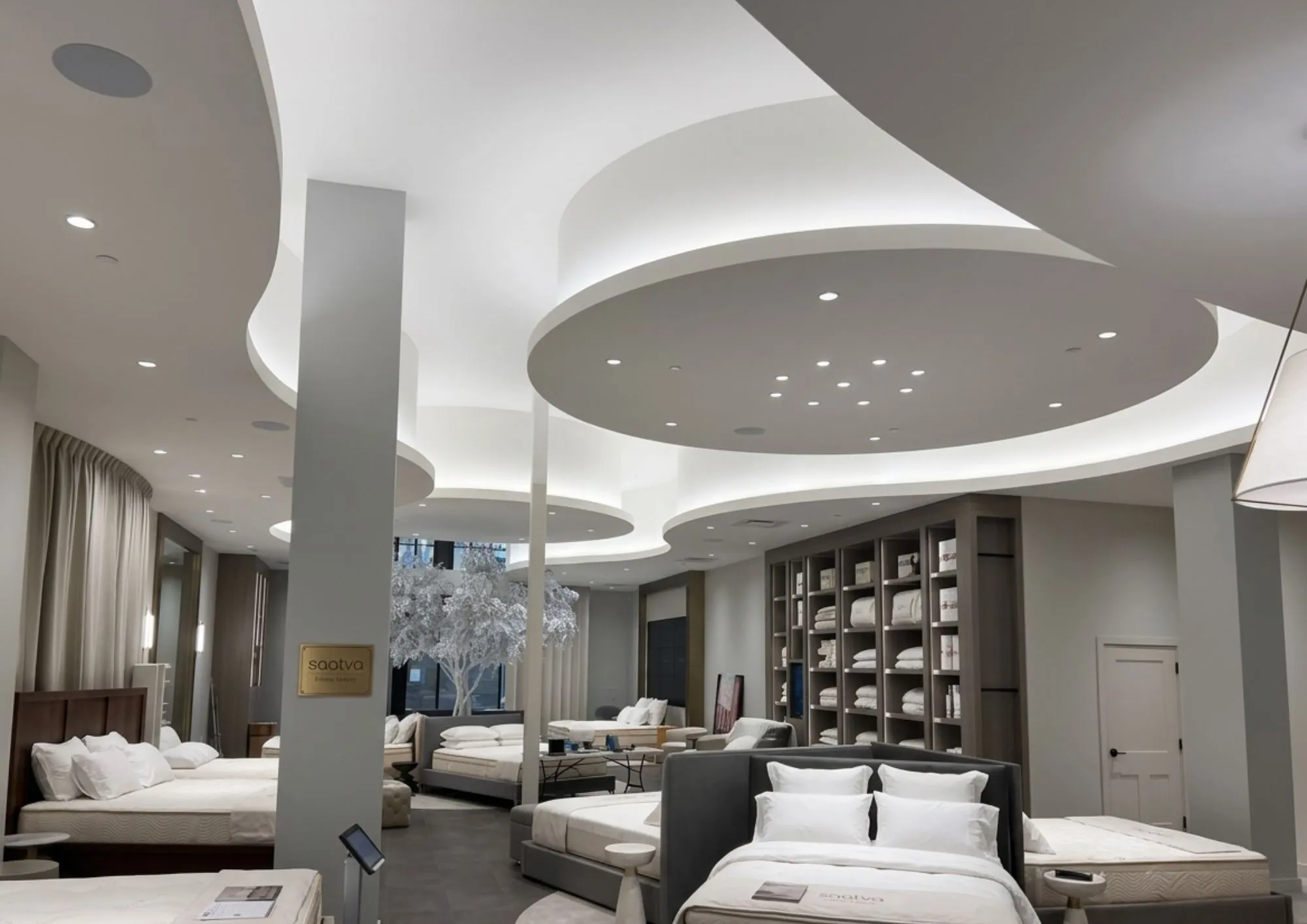
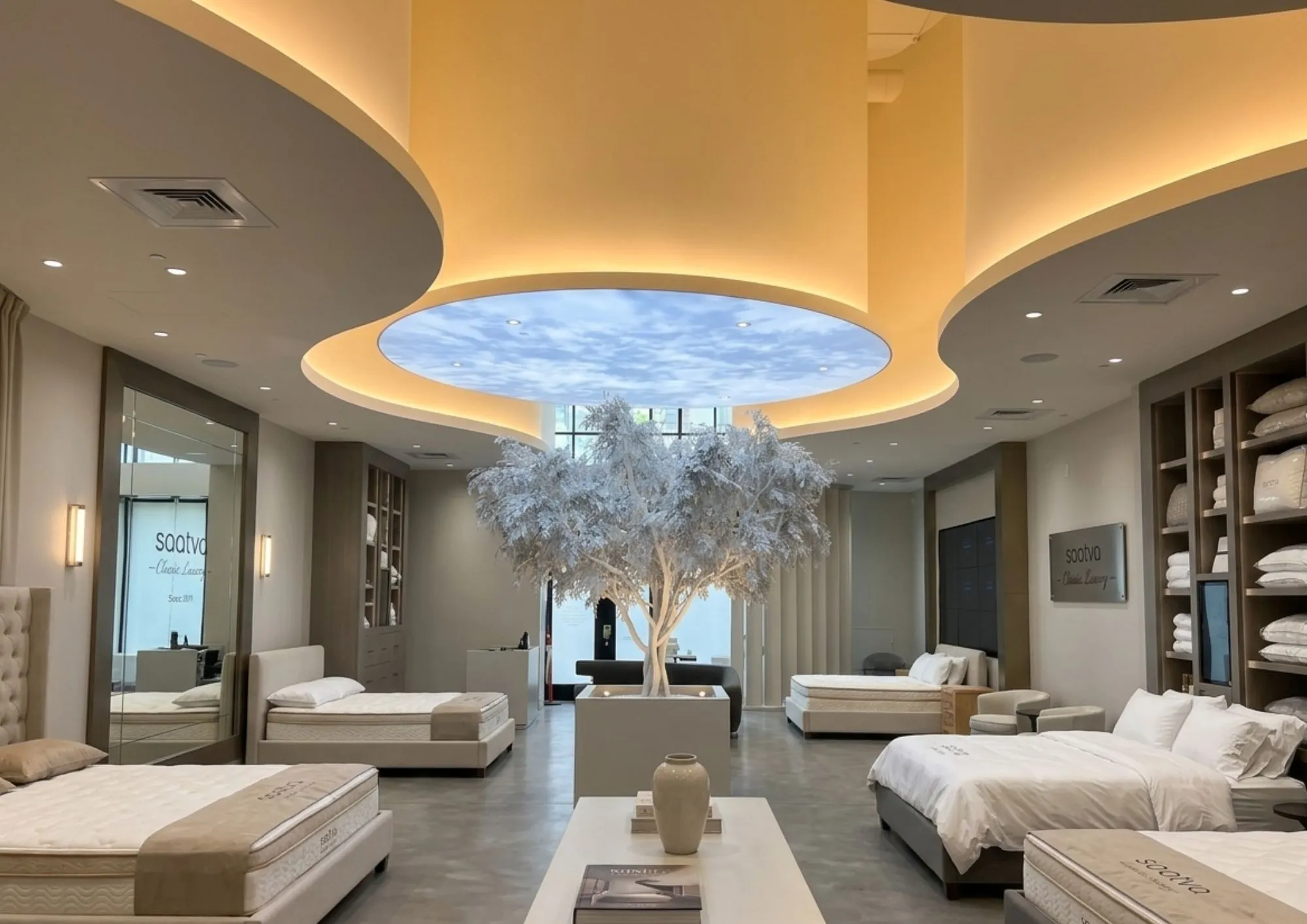
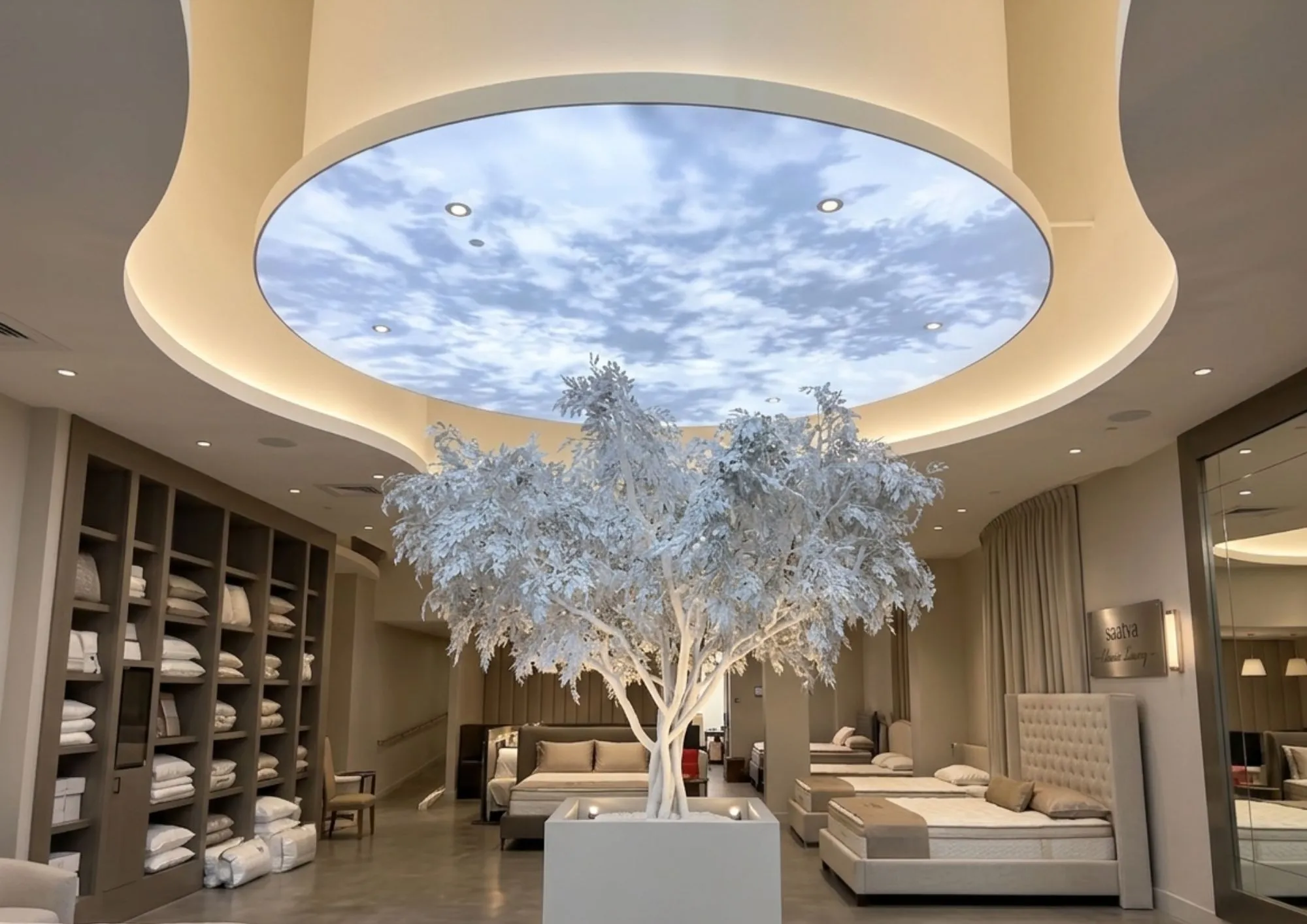
The interaction between the serpentine and round soffits also created access constraints for paint. Tight conditions between the forms made it difficult to complete overhead finish work in the normal sequence. Magnum’s team resolved this by strategically holding the diffused lighting soffits at select locations — clearing access for paint to complete work overhead — then returning to close out the lighting troughs after paint finished. That kind of sequencing decision requires the framing and painting divisions to operate as a coordinated unit rather than in separate handoff phases. On this project, they did.

CONTRACTOR

ARCHITECT

LOCATION

DIVISIONS

YEAR COMPLETED
2026
Project Gallery
Single Contract, Three Trades
Magnum brought three divisions to this Palo Alto retail TI under a single contract: drywall framing, T-bar ceiling systems, and painting. For Clune Construction, that meant one point of accountability across the full interior finishing scope. The finished space reflects the custom ceiling design, precise paint finishes, and coordinated install sequences that Saatva’s retail environment required — executed by Magnum’s Northern California commercial finishing teams.
The Team
Foreman Chad Becksted led the field execution on this project. His lead framers, rockers, and finishers drove the bracing solutions and soffit sequencing that kept the job on track. Painter Adrean Razo contributed to the coordination work that moved paint through the tightest conditions on the project.